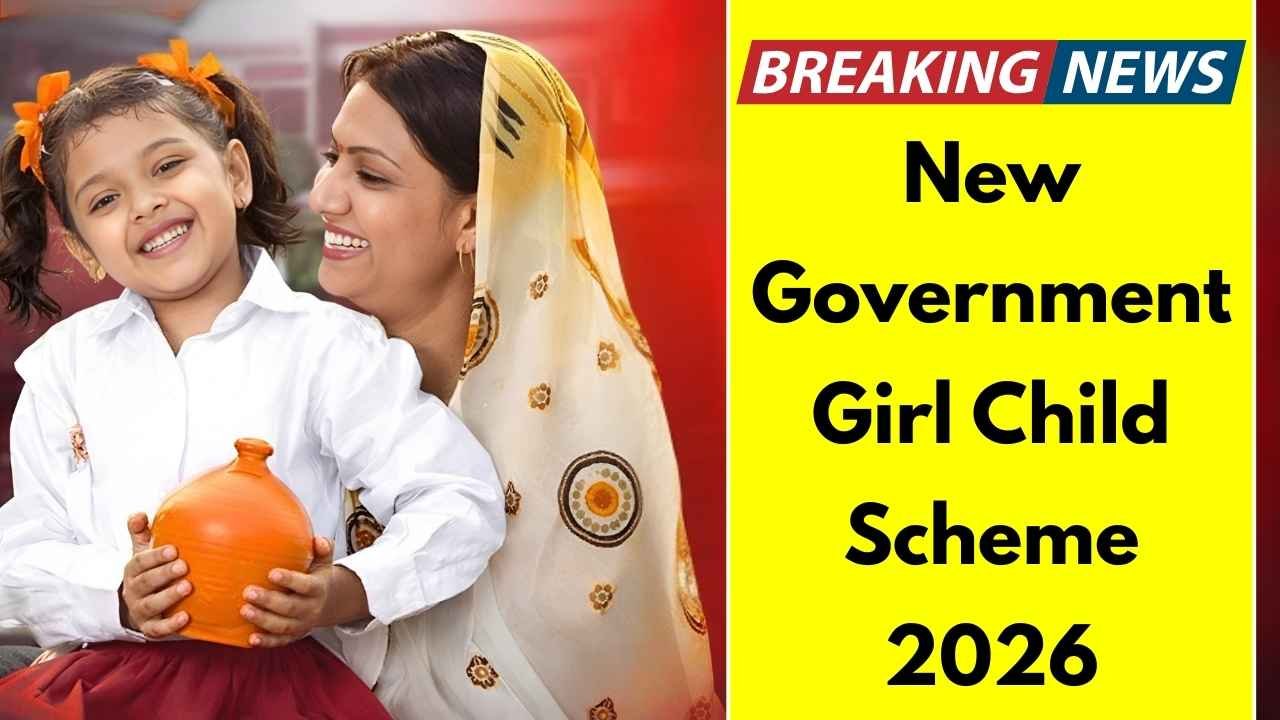
Don’t Delay Girl Child Scheme 2026: The birth of a daughter brings pride, celebration, and a deep sense of responsibility. In 2026, several government-backed girl child schemes are offering structured financial support to ensure that every girl gets equal opportunities in education and personal growth. From lump sum deposits at birth to maturity benefits of up to ₹2 lakh or more at adulthood, these schemes are designed to reduce financial pressure on families. Understanding the latest state-wise benefits can help parents make informed decisions right from day one.
Big Cash Boost At Birth
Many state governments now provide an immediate financial incentive at the time of a girl’s birth. This first installment ranges between ₹5,000 and ₹25,000 depending on the region and family income category. The amount is usually credited directly to the mother’s bank account or placed in a fixed deposit under the child’s name. This early support helps families manage initial healthcare costs, vaccinations, and essential newborn expenses without financial strain.
Central Savings Plan Advantage
One of the most reliable long-term options remains the Sukanya Samriddhi Account, which allows parents to invest annually in their daughter’s name. With competitive interest rates revised quarterly by the government, the accumulated amount can easily cross ₹2 lakh over 15 to 21 years depending on contributions. The scheme also offers tax benefits, making it attractive for middle-income families who want disciplined savings combined with security and guaranteed returns.
Uttar Pradesh Support Package
Uttar Pradesh runs schemes that provide staged financial support from birth until higher education. Eligible families receive initial assistance after birth registration, followed by installments when the girl enrolls in school and completes key academic milestones. In some cases, the combined benefits may reach close to ₹2 lakh by the time she turns 21. The scheme focuses on improving school enrollment and reducing dropout rates among girls in rural districts.
Rajasthan Education Incentive Model
Rajasthan has structured girl child benefits around education continuity. Parents receive financial transfers when their daughter enters Class 1, Class 6, Class 10, and Class 12. These milestone-based payments encourage consistent schooling. If all conditions are met and the girl remains unmarried until adulthood, the total support package becomes substantial. The emphasis is not just on financial assistance but on ensuring that girls complete their secondary education without interruption.
Madhya Pradesh Long Term Deposit Plan
Madhya Pradesh offers a long-term deposit model where the government invests a fixed amount at birth on behalf of eligible girls. The deposit matures when the girl turns 21, potentially crossing ₹2 lakh depending on accumulated interest. This structure benefits families who may not be able to invest regularly themselves. The scheme promotes financial discipline while safeguarding funds exclusively for the daughter’s future education or entrepreneurial ambitions.
Tamil Nadu Protection Promise
Tamil Nadu’s girl child protection initiatives provide deposits in the name of daughters from smaller families. Depending on eligibility criteria such as income level and family size, a fixed deposit is created that matures after 18 years. The maturity amount, combined with accrued interest, becomes a significant fund for higher studies. The state strongly links benefits with family planning awareness and educational participation, ensuring a balanced social impact.
West Bengal Scholarship Momentum
West Bengal focuses on educational empowerment through scholarship-based transfers. Girls receive annual grants during school years and a larger amount upon reaching 18, provided they continue education and remain unmarried. Though not purely a birth incentive, the total cumulative support significantly eases academic expenses. The scheme has successfully increased secondary school enrollment among girls, particularly in economically weaker households.
Haryana Empowerment Commitment
Haryana’s structured support includes deposits made at birth and periodic incentives tied to immunization and school attendance. The final payout at 18 or 21 years can exceed ₹2 lakh when all eligibility conditions are fulfilled. The state has integrated digital tracking to ensure transparency and timely disbursement. This approach not only provides financial stability but also promotes healthcare awareness and educational discipline.
Maharashtra Progressive Assistance Plan
Maharashtra combines direct benefit transfers with education-linked incentives. Financial support begins at birth and continues in stages throughout schooling years. Families that meet income eligibility norms receive periodic installments that accumulate into a meaningful corpus over time. The state has also introduced online monitoring systems to reduce paperwork and ensure quicker approval of applications, making access to benefits smoother than before.
Documents And Eligibility Rules
Although each state sets its own guidelines, common requirements include the girl child’s birth certificate, Aadhaar details, income certificate, domicile proof, and a linked bank account. Many schemes require the girl to remain unmarried until 18 years of age. Some benefits are restricted to families with one or two daughters. Timely registration after birth is crucial, as delayed applications may lead to disqualification in certain states.
Digital Application Made Simple
Most states now offer online portals for scheme registration, reducing the need for repeated visits to government offices. Parents can upload documents, track status, and receive notifications digitally. In rural areas, Anganwadi centers and local administrative offices assist families with the registration process. Ensuring correct documentation and verifying bank account details before submission helps avoid delays in benefit disbursement.
Education And Marriage Safeguard
A key objective behind these schemes is preventing early marriage and encouraging higher education. The maturity benefits are often released only after the girl turns 18 and confirms continued studies or skill development. This conditional structure ensures that financial assistance directly contributes to empowerment rather than short-term spending. By linking funds to educational progress, states aim to create long-lasting social transformation.
Real Financial Impact For Families
When combined with disciplined savings under central schemes and state-level incentives, total financial support can comfortably cross ₹2 lakh or even more by adulthood. For families in lower and middle-income categories, this corpus can cover college admission fees, vocational training, or startup expenses. The schemes effectively reduce dependency on high-interest loans while strengthening financial confidence within households.
Final Verdict For Parents
Girl Child Scheme 2026 represents a powerful step toward equal opportunity and long-term financial planning for daughters across India. With structured deposits, milestone-based incentives, and maturity payouts reaching ₹2 lakh or beyond, these programs provide both security and motivation. Parents who register early, maintain documentation, and ensure educational continuity can unlock maximum benefits. Supporting a daughter’s dreams today through these schemes can build a future filled with independence, education, and confidence tomorrow.
Disclaimer: This article is for informational purposes only. Scheme benefits, eligibility, and payout amounts may change by state. Please verify official government notifications before applying or making financial decisions.