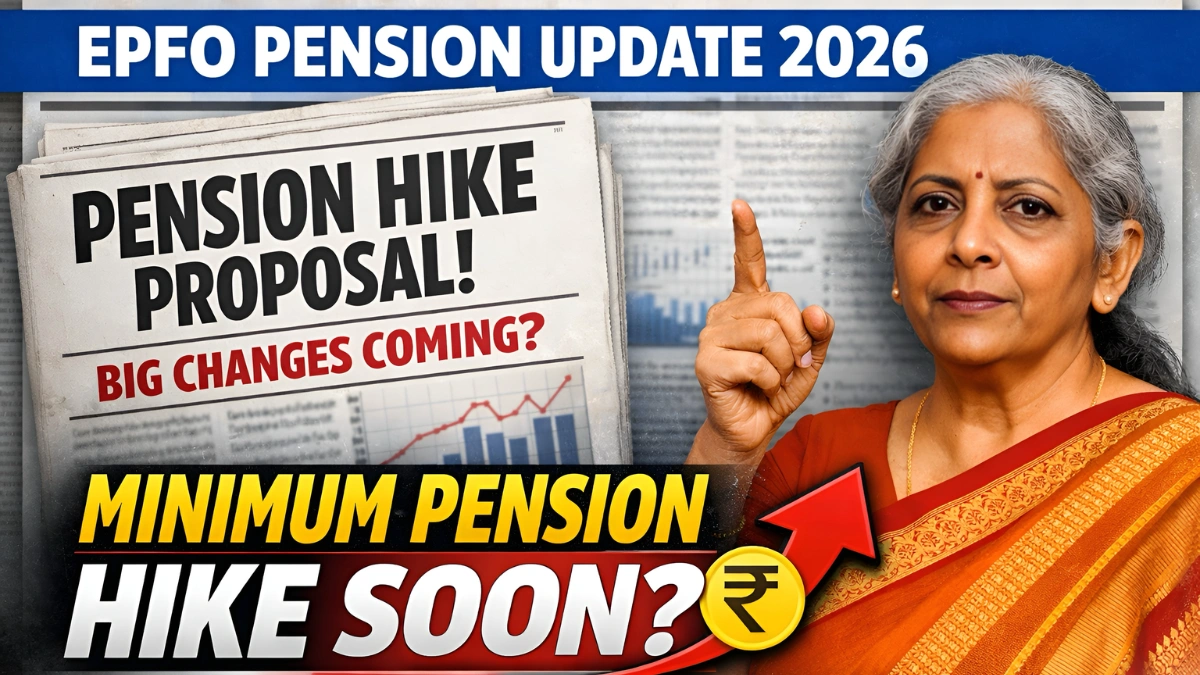
EPFO Pension Update 2026: Retirement should bring peace of mind, not financial stress. In 2026, conversations around EPFO pension reforms have once again taken center stage as discussions about a possible minimum pension hike gather serious attention. For lakhs of retirees under the Employees’ Pension Scheme, even a small increase can make a meaningful difference in managing everyday expenses. With inflation continuing to impact household budgets, the demand for a realistic pension revision has become stronger than ever before.
The growing buzz around the EPFO pension update 2026 is not just another routine policy discussion. It reflects a deeper concern about the financial stability of retired private sector employees who depend largely on their monthly pension. As policy circles review the proposal, pensioners across the country are closely watching developments, hoping that 2026 could finally bring long-awaited relief.
Pension Pressure Reaches Peak
The demand for increasing the minimum pension has reached a new high in 2026. Retirees argue that the current minimum pension amount does not reflect present-day living costs. Over the years, expenses related to healthcare, medicines, rent, electricity, and groceries have steadily risen. However, pension payouts have not seen a proportionate adjustment. This imbalance has intensified calls for reform, making the pension hike proposal a major topic in financial and social discussions.
Inflation Squeezes Retiree Budgets
Inflation has emerged as one of the biggest reasons behind the renewed focus on EPFO pension revision. Senior citizens often have limited income sources, and many rely entirely on their monthly pension. Even small price increases in essential goods significantly impact their monthly planning. Pensioners’ associations highlight that without periodic revisions, the real value of pension income keeps declining. This economic reality has strengthened arguments in favor of raising the minimum pension threshold.
Government Reviews Financial Impact
Policy discussions in 2026 are reportedly centered around assessing the financial impact of a potential hike. Increasing the minimum pension requires careful planning to ensure that the pension fund remains stable in the long term. Authorities are examining contribution patterns, fund reserves, and projected future liabilities. A balanced approach is necessary so that the benefit reaches pensioners without placing excessive pressure on the Employees’ Pension Scheme corpus.
EPS Framework Under Spotlight
The Employees’ Pension Scheme operates through contributions made by employers and partial support from the government. A portion of the employer’s EPF contribution is directed toward EPS, forming the base of monthly pension calculations. However, wage ceilings and fixed contribution formulas have limited pension growth for many workers. In 2026, experts are revisiting whether adjustments in structure, contribution limits, or calculation methods could create a fairer pension system.
Voices Of Pensioner Groups Grow Louder
Pensioner organizations have actively presented their concerns before relevant authorities. Representations, memorandums, and collective appeals have kept the issue alive in public discourse. Many retired workers share real-life stories of struggling to manage expenses despite decades of service. Their consistent engagement has ensured that the minimum pension hike proposal remains under review rather than being sidelined. The growing unity among pensioners has strengthened the movement for reform.
Impact On Future Workforce
The outcome of the 2026 pension discussions will not only affect current retirees but also influence future beneficiaries. Employees contributing to EPFO today want clarity on what they can expect after retirement. A meaningful revision in minimum pension could improve trust in the system and encourage long-term financial planning. It may also prompt younger employees to explore higher contribution options to secure better retirement income.
Sustainability Remains Key Concern
One of the central challenges in implementing a pension hike is ensuring sustainability. Pension funds must support beneficiaries for many years, sometimes decades. Actuarial studies and financial projections are essential before approving any revision. Policymakers are expected to analyze long-term fund performance and demographic trends. While pensioners seek immediate relief, authorities must ensure that any increase remains viable without causing financial strain on the scheme.
Higher Pension Awareness Expands
Recent legal developments regarding higher pension eligibility have increased awareness among EPFO members. Many contributors are now paying closer attention to how their pension is calculated and what options are available. This heightened awareness has added momentum to discussions around minimum pension revision. Workers and retirees alike are demanding transparency, clear communication, and simplified processes related to pension benefits and entitlements.
Economic And Social Implications
A pension hike carries broader economic and social implications. Increased monthly income for retirees can improve consumption, healthcare access, and overall quality of life. Financial security in old age reduces dependency and strengthens social stability. From a policy perspective, enhancing pension support reflects commitment toward social welfare. The 2026 discussions highlight the importance of adapting retirement benefits to modern economic realities.
What Pensioners Should Monitor
While optimism is growing, pensioners must remain cautious and rely only on official confirmations. Policy proposals often undergo multiple levels of scrutiny before final approval. Any decision will likely be communicated through formal channels. Pensioners should stay updated with verified announcements and avoid speculation. Keeping documentation updated and understanding eligibility criteria can help beneficiaries respond quickly if changes are implemented.
A Turning Point For Retirement Security
The EPFO Pension Update 2026 could mark a turning point in retirement policy if the minimum pension hike proposal moves forward. The increasing attention given to this issue shows that authorities recognize the financial challenges faced by retirees. Whether through direct pension enhancement or structural adjustments in EPS, the focus is clearly on improving retirement security. The coming months may determine how significantly pension reforms shape the future.
Retirement is a phase that deserves dignity, stability, and financial assurance. The current momentum around EPFO pension reforms suggests that meaningful discussions are taking place at policy levels. If the minimum pension hike is approved, it could provide much-needed relief to millions of retirees across the country. Even if final decisions take time, the fact that the issue is under serious review signals progress. For now, pensioners and contributors remain hopeful that 2026 will bring a stronger and more supportive pension framework.
Disclaimer: This article is for informational purposes only and does not constitute financial or legal advice. Readers should verify all updates through official EPFO notifications before making pension-related decisions.